
Makhana vs Popcorn: Which Is Actually the Healthier Snack? (2026 Nutrition Comparison)
Makhana and popcorn both claim the "healthy snack" crown, but gram-for-gram USDA and ICMR-aligned data tells a more surprising story than most comparisons admit. Here's the full, data-backed breakdown — nutrition, real serving sizes, glycemic index, risks, and who should choose which.
BTC | Team
VerifiedBTC Nutrition & Culinary Team
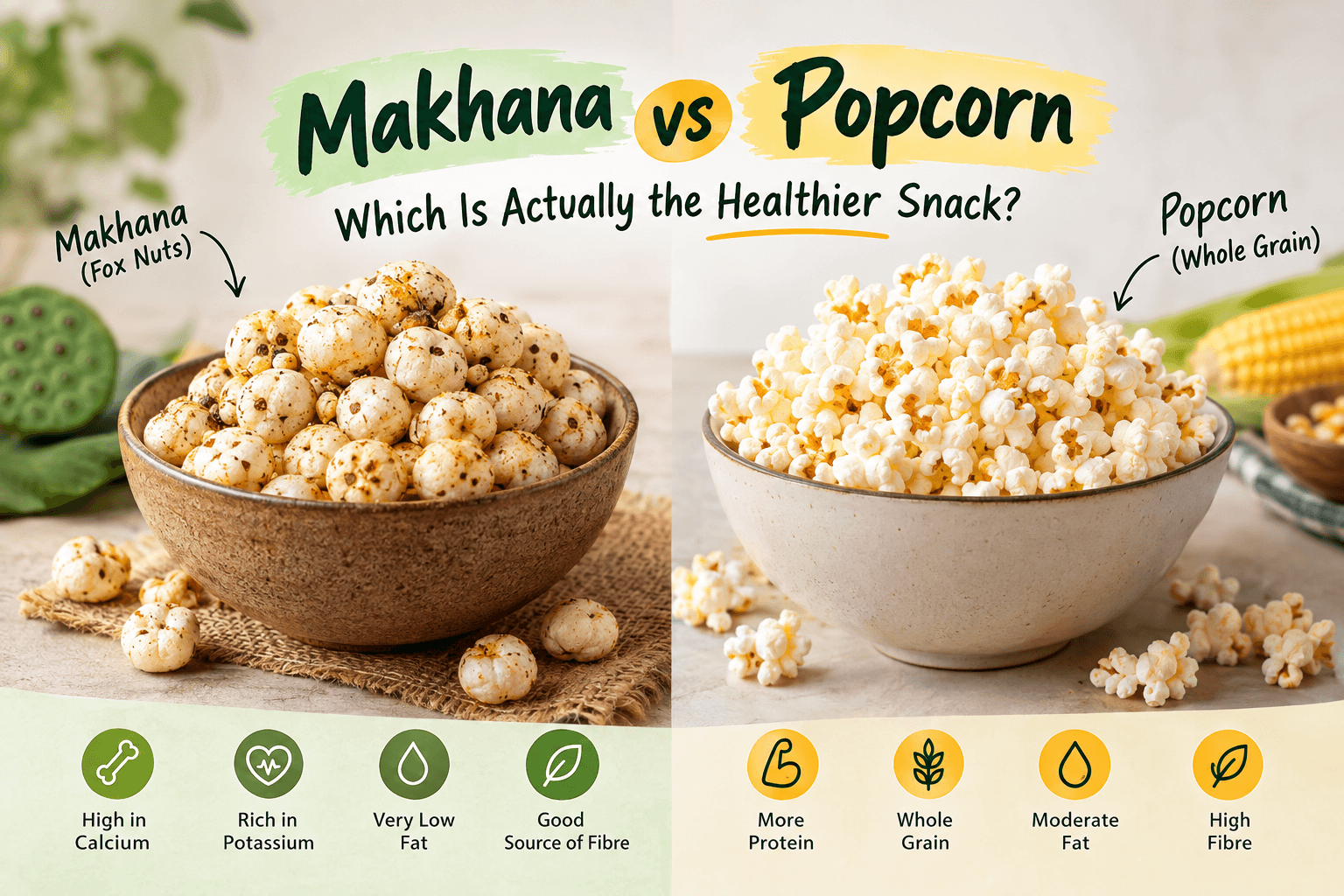
Both makhana (fox nuts) and popcorn have built reputations as “guilt-free” crunch — one riding India’s booming healthy-snacking wave, the other carrying decades of “whole grain” goodwill from the West. Put them side by side using the strongest available USDA and ICMR-aligned nutrient data, and the picture is more nuanced — and more interesting — than most comparisons admit.
The Quick Answer
For the average person eating a typical bowl or handful, makhana usually wins — mainly because of how people actually eat it (lightly roasted, minimal oil) versus how most people actually eat popcorn (buttered, salted, or from a cinema counter). Strip both down to their plainest form and compare gram-for-gram, however, and popcorn’s numbers are far more competitive than most blogs claim: it edges makhana on protein and matches it on fibre per 100 g. The real differences appear in glycemic response variability, minerals, sodium, and how each snack affects portion control.
What Are They, Exactly?
Makhana (fox nuts, phool makhana, or lotus seeds) are the roasted, popped seeds of the prickly water lily (Euryale ferox), harvested mainly from wetlands in Bihar, which accounts for the large majority of India’s production. They have been part of Indian diets for centuries — eaten during religious fasts, offered as prasad, and used in Ayurvedic preparations. The category has grown rapidly as a packaged snack in recent years, supported by dedicated policy attention including the creation of a National Makhana Board.
Popcorn is dried maize (corn) kernels that expand when internal moisture turns to steam. It is one of the world’s oldest snack foods, a genuine whole grain, and its nutritional profile swings dramatically with preparation — from air-popped and plain (genuinely useful) to cinema butter tubs or caramel corn (closer to dessert).
The Numbers: Per 100 g (Plain, Unsalted, Unoiled)
Most comparison articles mix sources, which produces contradictory “winner” claims. The figures below are consolidated from USDA FoodData Central references for air-popped popcorn and the most consistent USDA/ICMR-aligned values for roasted makhana. Commercial samples of both can vary modestly with variety, moisture, and processing.
| Nutrient (per 100 g) | Makhana (roasted, plain) | Popcorn (air-popped, plain) |
|---|---|---|
| Calories | ~347–360 kcal | ~387 kcal |
| Protein | ~9.7–10.5 g | ~12.9 g |
| Fat | ~0.1–0.5 g | ~4.5 g |
| Carbohydrates | ~76–78 g | ~77.8 g |
| Dietary fibre | ~14–15 g (some lab analyses lower) | ~14.5 g |
| Sugar | ~0–1 g | ~0.9 g |
| Calcium | ~20–60 mg (source-dependent) | ~7 mg |
| Magnesium | ~150–210 mg (higher end in some data) | ~144 mg |
| Potassium | ~500 mg | ~329 mg |
| Iron | ~1.4–3.5 mg | ~3.2 mg |
| Sodium (unsalted) | ~1–5 mg | ~8 mg |
Key takeaway most blogs skip: By dry weight, popcorn is not a nutritional lightweight. It supplies more protein per 100 g, matches fibre, and its fat (when air-popped) remains modest and unsaturated. Makhana’s clearest paper advantages are near-zero fat, higher potassium, very low sodium, and (in many datasets) meaningfully more calcium.
The Number Nobody Compares Properly: Real Serving Size
This is the practical decider, and almost every comparison ignores it.
Makhana is relatively dense. 30 g is a modest, fist-sized bowl. Popcorn is extremely light and airy: the same 30 g fills roughly 3–4 cups — a large, satisfying bowl. Volume and chewing time per calorie therefore favour popcorn for satiety and mindless-snacking control, while makhana delivers more concentrated nutrients per bite.
- 30 g roasted makhana ≈ 104–110 kcal, ~2.9–3.2 g protein, ~4.3–4.5 g fibre
- 30 g (≈3-cup) air-popped popcorn ≈ 116 kcal, ~3.9 g protein, ~4.3 g fibre, ~1.4 g fat
At equal weight the two are closer than marketing suggests. The real-world gap is driven almost entirely by toppings and how much people actually eat.
Glycemic Index: Conflicting but Useful Data
Makhana’s reported GI ranges from the mid-30s (one controlled human study on roasted fox nuts recorded ~37) to the mid-60s depending on preparation and testing method. Popcorn consistently lands in the 55–65 moderate range. India-specific packaged-makhana GI data remain limited compared with international tables for popcorn. Honest summary: both are moderate-GI foods when eaten plain. Neither should be treated as reliably “low-GI” without brand- or batch-specific information. Pairing either with protein, fat, or vegetables remains the more reliable way to blunt blood-sugar response.
Health Benefits, Head to Head
Weight management: Both are excellent replacements for chips, biscuits, and most namkeen when prepared simply. Makhana offers an unusually favourable protein-to-fat ratio for a plant snack; popcorn’s bulk per calorie makes overeating harder until butter or oil is added.
Heart health: Makhana’s very low sodium plus solid potassium and magnesium make it the cleaner default for blood-pressure management. Popcorn is fine provided salt and fat stay minimal.
Blood sugar: Both are reasonable in moderate plain portions as part of a balanced meal. The GI uncertainty noted above means neither is blood-sugar-neutral on its own.
Bone health: Makhana holds a clear edge on calcium in most datasets, plus useful phosphorus.
Digestion: Fibre quantities are comparable per 100 g. Makhana’s fibre tends to be gentler for most people; popcorn’s insoluble hull fibre can produce more gas or bloating in sensitive guts.
Pregnancy and special diets: Makhana is traditionally recommended in Indian pregnancy diets for calcium and digestibility. Both are naturally gluten-free and vegan when plain; flavoured versions of either can introduce dairy or other allergens.
Risks and Side Effects
Makhana:
- Contains oxalates (similar to spinach or beetroot). People with a history of calcium-oxalate kidney stones should moderate intake and discuss with a clinician.
- Large fibre loads eaten quickly without adequate fluid can cause bloating or temporary constipation.
- Rare but documented seed/nut allergies exist; introduce cautiously if you have tree-nut or seed allergies.
- Roasting in ghee or oil (common at home) reintroduces the fat and calories that make the plain version attractive.
Popcorn:
- Unpopped kernels (“old maids”) can crack teeth or dislodge dental work; thin hulls can lodge under the gumline.
- Choking hazard for children under 4 (American Academy of Pediatrics guidance).
- Historical microwave-popcorn issues (diacetyl “popcorn lung” in factory workers and older PFAS-lined bags) have largely been phased out by major brands, but labels remain worth checking.
- The long-standing claim that popcorn worsens diverticulitis has been largely debunked; hard particles do not appear to cause flares, though large amounts can still feel harder to digest.
- Over-microwaved or burned popcorn can form compounds of concern — simply avoid pushing the “extra crispy” button.
Cost and Accessibility in India
Plain popcorn kernels are typically cheaper per gram of actual nutrition than packaged roasted makhana. Makhana harvesting remains labour-intensive and the premium packaged segment commands higher prices. Home air-popped popcorn is one of the lowest-cost nutrient-dense snacks available. Budget-conscious households will usually find plain popcorn hard to beat on cost-per-calorie of usable nutrition.
Who Should Choose What
Prefer makhana if you:
- Are managing blood pressure and want near-zero sodium by default
- Want higher calcium from a plant snack
- Are pregnant, nursing, or prefer a lighter evening snack
- Are replacing fried namkeen or biscuits with something culturally familiar
Prefer popcorn if you:
- Want maximum volume and chewing time for the fewest calories
- Are working to a tighter grocery budget
- Have no history of kidney stones and can keep preparation simple
- Want a true whole grain in snack form
Use caution with makhana if you have calcium-oxalate kidney stones, gout, or known seed/nut allergies.
Use caution with popcorn if young children are present, you have sensitive teeth or dental work, or you rely on heavily flavoured microwave bags.
How to Prepare Each the Healthy Way
- Makhana: Dry-roast on low heat with no oil or at most half a teaspoon for a full bowl. Season with black pepper, roasted cumin, or a light chaat masala instead of extra salt.
- Popcorn: Air-pop or use a stovetop pot with a teaspoon of oil for a full batch. Season with nutritional yeast, smoked paprika, or a spritz of lime. Always discard unpopped kernels before eating.
The Verdict
Neither snack is unhealthy and neither is a miracle food. Gram for gram they are closer than most internet comparisons suggest: popcorn leads on protein and matches fibre; makhana leads on fat content, sodium control, and (in most data) calcium. In everyday Indian eating patterns, makhana often wins simply because it is more consistently prepared with minimal additions, while popcorn’s reputation is dragged down by butter, caramel, and cinema portions. The single biggest lever for either food is not the base ingredient — it is what you add to it and how much you eat without noticing.
Frequently Asked Questions
Is makhana better than popcorn for weight loss?
At equal preparation (plain, minimal oil), both support weight loss through fibre and low calorie density. Makhana’s lower fat content gives it a slight edge for very fat-conscious diets; popcorn’s larger volume per calorie can help control portions more intuitively.
Which has more protein, makhana or popcorn?
Per 100 g, air-popped popcorn (~12.9 g) actually has more protein than roasted makhana (~9.7–10.5 g), based on USDA and consistent ICMR-aligned data — a detail most makhana-marketing content leaves out.
Can diabetics eat makhana or popcorn?
Both are reasonable in moderate, plain portions as part of a balanced diet, but glycemic index data for both is inconsistent across sources — pairing either with protein or healthy fat (like a few nuts) blunts the blood sugar response better than relying on the snack alone.
Is makhana safe for people with kidney stones?
People prone to calcium-oxalate stones should moderate makhana intake and consult a doctor, since it contains oxalates similar to spinach or beetroot.
Is popcorn actually a whole grain?
Yes — popcorn is one of the few genuinely whole-grain snack foods, retaining the bran, germ, and endosperm of the corn kernel when air-popped.
Data drawn primarily from USDA FoodData Central and consistent ICMR-aligned references. Commercial products and preparation methods introduce normal variation. This article is for general nutrition information and isn’t a substitute for personalised medical or dietary advice — talk to a doctor or dietitian for guidance specific to your health conditions.
BTC | Team
BTC Editorial & Nutrition TeamThe Born To Crave Editorial and Food Science Team crafts deep-dive nutritional guides, culinary research, and healthy snacking breakdowns for wellness-focused consumers across India.
Continue Reading
More expert guides in Nutrition

Never Miss a Healthy Snacking Breakthrough
Get scientifically backed nutritional breakdowns, healthy 5-minute recipes, and exclusive discount codes directly in your inbox.