
Makhana: The Complete Guide to Fox Nuts, Nutrition, Calories, Benefits & How to Roast
Everything you need to know about makhana (fox nuts): what it is, how it is produced, nutrition per 100g, calories by serving, ingredients, benefits, pre-workout use, air-fryer roasting and how to choose good-quality makhana.

BTC Editorial Team
VerifiedBTC Food & Nutrition Team
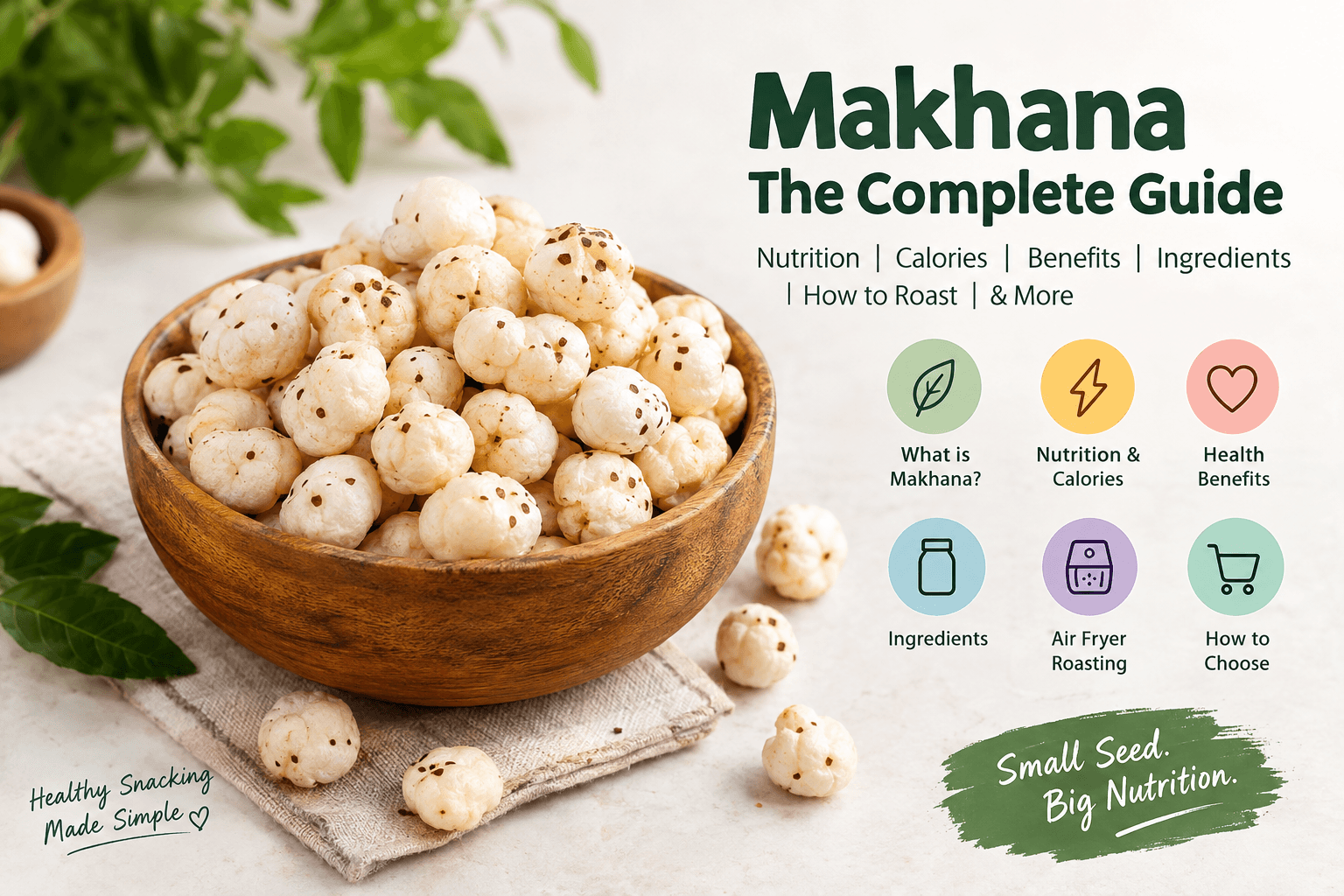
# Makhana: The Complete Guide to Fox Nuts
Makhana, also called fox nuts or phool makhana, is the popped edible seed of the aquatic plant Euryale ferox. It is widely eaten in India as a roasted snack and is also used in curries, kheer and other dishes.
This guide covers what makhana is, how it is produced, its nutrition and calories, ingredients, benefits, pre-workout use, air-fryer roasting and how to choose good-quality makhana.
What Is Makhana?
Makhana is the popped kernel of the seeds of Euryale ferox, an aquatic plant also known as the gorgon nut or fox nut. The raw seeds are processed, dried, heated and popped to create the light, white and crunchy makhana commonly sold as a snack.
What are fox nuts?
Fox nuts are another common name for makhana. The terms fox nuts, gorgon nuts, phool makhana and makhana are commonly used for the edible popped seeds of Euryale ferox.
What is phool makhana?
Phool makhana refers to the popped makhana kernel. The word phool describes its flower-like, expanded appearance after popping.
How is makhana produced?
Makhana grows in stagnant freshwater bodies and wetlands. In India, commercial cultivation is strongly associated with Bihar and the wider eastern region. The seeds are harvested, cleaned, dried, graded, heated and popped. Read Full Article: Makhana (Fox Nuts): How It's Harvested, and What the Evidence Says About Its Benefits →
Makhana Nutrition Per 100g
A commonly reported reference profile for plain makhana per 100g is approximately 347 kcal, 9.7g protein, 76.9g carbohydrates and 0.1g fat. Fibre and mineral values can vary by reference and processing.
| Nutrient | Approx. per 100g |
|---|---|
| Calories | 347 kcal |
| Protein | 9.7g |
| Carbohydrates | 76.9g |
| Fat | 0.1g |
| Dietary fibre | roughly 7–14g, depending on reference |
| Calcium | roughly 60mg |
The exact nutritional composition can vary according to the raw material, processing method, roasting, moisture and whether oil, salt or flavouring has been added.
Makhana Calories by Serving
Plain makhana contains about 347 kcal per 100g using a commonly cited reference value.
30g Makhana Calories
30g of plain makhana provides approximately 104 kcal.
50g Makhana Calories
50g of plain makhana provides approximately 174 kcal.
100g Makhana Calories
100g of plain makhana provides approximately 347 kcal.
| Serving | Approx. calories |
|---|---|
| 30g | 104 kcal |
| 50g | 174 kcal |
| 100g | 347 kcal |
Actual calories can differ between plain, roasted and flavoured products because added oil, ghee, sugar or seasoning changes the nutrition.
Makhana Ingredients
Plain makhana has one main ingredient: phool makhana, the popped seed of Euryale ferox.
For plain or minimally processed makhana, the ingredient list can simply read Phool Makhana.
Roasted or flavoured makhana can contain additional ingredients such as:
- Makhana
- Edible oil or ghee
- Salt
- Herbs and spices
- Seasoning blends
- Other flavouring ingredients
The exact ingredients depend on the product. Always check the ingredient list and nutrition panel of packaged flavoured makhana.
Makhana Benefits
Makhana can be a nutritious snack choice because plain makhana is low in fat and provides carbohydrates, protein and dietary fibre. Its overall nutritional value depends on the serving size and preparation.
Protein and Fibre
Makhana provides protein and dietary fibre, although it should not be considered an exceptionally high-protein food.
Snacking and Satiety
A serving of makhana provides volume along with carbohydrates, some protein and fibre. This can make it useful as part of a snack, but fullness depends on portion size and the rest of the meal or snack.
What the Evidence Supports
Research describes Euryale ferox as a food containing carbohydrates, protein, fibre, minerals and bioactive compounds. Laboratory and review findings about possible health effects should not be presented as proof that makhana treats or prevents disease.
For everyday nutrition, the straightforward takeaway is: plain makhana is a low-fat, carbohydrate-rich snack that also provides protein and fibre.
Makhana vs Popcorn
Makhana and popcorn are both light, crunchy snacks, but their nutrition depends heavily on serving size and preparation.
For a detailed comparison, read: Makhana vs Popcorn: Which Is Actually the Healthier Snack? Read Full Article: Makhana vs Popcorn: Which Is Actually the Healthier Snack? (2026 Nutrition Comparison) →
Makhana as a Pre-Workout Snack
Makhana can be used as a light pre-workout snack because it provides carbohydrates and is relatively low in fat when eaten plain.
For a detailed guide on what to eat before training, read:
Pre-Workout Snacks in India Read Full Article: Makhana as a Pre-Workout Snack: What the Evidence Actually Supports →
Makhana alone is not a complete pre-workout formula for everyone. Training duration, intensity and individual dietary needs can change what works best.
How to Make Makhana in an Air Fryer
To roast makhana in an air fryer, use approximately 180°C for 6–8 minutes, shaking the basket once or twice, until the makhana becomes crisp.
Basic Air-Fryer Method
- 1Place plain makhana in a bowl.
- 2Add a small amount of oil or ghee if desired.
- 3Add salt or your preferred seasoning.
- 4Preheat the air fryer if your model requires it.
- 5Air fry at approximately 180°C for 6–8 minutes.
- 6Shake the basket halfway through.
- 7Allow the makhana to cool briefly before checking the final crunch.
The key test is texture: properly roasted makhana should be crisp rather than chewy.
For the complete method, read:
How to Make Makhana in an Air Fryer
How to Choose Makhana
When buying makhana, look at size, freshness, texture, appearance and ingredients.
Size
Larger, well-popped pieces are often preferred for snacking because they provide a substantial crunchy texture. Size alone does not determine nutritional quality.
Freshness
Fresh makhana should smell clean and mild. Avoid products with a stale, musty or rancid smell.
Texture
Good roasted makhana should be crisp and crunchy. If it is consistently soft or chewy, moisture may have affected the product.
Ingredients
For plain makhana, a short ingredient list is expected. For flavoured varieties, check the amount of oil, salt, seasoning and other added ingredients.
Packaged Makhana Checklist
Before buying packaged makhana, check:
- Ingredient list
- Nutrition information
- Net quantity
- Manufacturing and expiry or best-before information
- Packaging condition
- Storage instructions
- Added oil or seasoning
- Salt or sodium content if relevant to your diet
Frequently Asked Questions About Makhana
Is makhana healthy?
Yes, plain makhana can be part of a balanced diet. It is low in fat and provides carbohydrates, protein and dietary fibre. The nutritional profile changes when oil, ghee, sugar or seasoning is added.
Is makhana high in protein?
Makhana contains protein, but it is not exceptionally high in protein. Commonly cited data gives about 9.7g protein per 100g, or about 2.9g per 30g serving.
How many calories are in 30g makhana?
Approximately 104 kcal per 30g, based on 347 kcal per 100g. Actual calories can vary by product and preparation.
What are makhana ingredients?
Plain makhana contains popped phool makhana, the seed of Euryale ferox. Flavoured makhana may also contain oil or ghee, salt, herbs, spices and seasoning ingredients.
Can I eat makhana before a workout?
Yes. A small serving of plain makhana can work as a light pre-workout snack because it provides carbohydrates and is relatively low in fat.
Can makhana be made in an air fryer?
Yes. Makhana can be air-fried at approximately 180°C for 6–8 minutes, shaking during cooking, until crisp.
Is makhana the same as lotus seed?
Makhana is the edible popped seed of Euryale ferox, commonly known as fox nut or gorgon nut. Although it is sometimes casually called a lotus seed, Euryale ferox is botanically distinct from the lotus plant.
Where is makhana mainly produced in India?
Bihar is the major makhana-producing region in India, particularly the Mithila and northern Bihar region. Makhana is also cultivated in other eastern and northeastern parts of India.
Conclusion
Makhana is the popped seed of Euryale ferox, commonly known as fox nut or gorgon nut. It is a light, crunchy Indian snack that can be eaten plain, roasted or flavoured.
The key points are:
- What is makhana? Popped Euryale ferox seed.
- Makhana nutrition: About 347 kcal, 9.7g protein, 76.9g carbohydrates and 0.1g fat per 100g in commonly cited reference data.
- 30g calories: Approximately 104 kcal using the 347 kcal per 100g reference.
- Ingredients: Plain makhana can contain only phool makhana; flavoured versions contain additional seasonings and/or oil.
- Benefits: Its useful nutritional features include low fat plus carbohydrates, protein and fibre.
- Pre-workout: A small serving can work as a light carbohydrate-containing snack.
- Air fryer: Around 180°C for 6–8 minutes is a practical starting point.
- Buying tip: Check freshness, crunch, ingredient list and the product nutrition panel.
Recommended Reading & Resources
BTC Editorial Team
BTC Food & Nutrition TeamThe Born To Crave Editorial and Food Science Team crafts deep-dive nutritional guides, culinary research, and healthy snacking breakdowns for wellness-focused consumers across India.
Continue Reading
More expert guides in Nutrition


Never Miss a Healthy Snacking Breakthrough
Get scientifically backed nutritional breakdowns, healthy 5-minute recipes, and exclusive discount codes directly in your inbox.