
Makhana as a Pre-Workout Snack: What the Evidence Actually Supports
Is roasted makhana a good pre-workout snack, or is it overhyped compared to energy bars? Here's what makhana's actual nutrition profile supports, how to time it before training, and when a bar or banana is still the better call.
Dr. Anjali Menon, RD
VerifiedBTC Nutrition & Culinary Team
# Makhana as a Pre-Workout Snack: What the Evidence Actually Supports
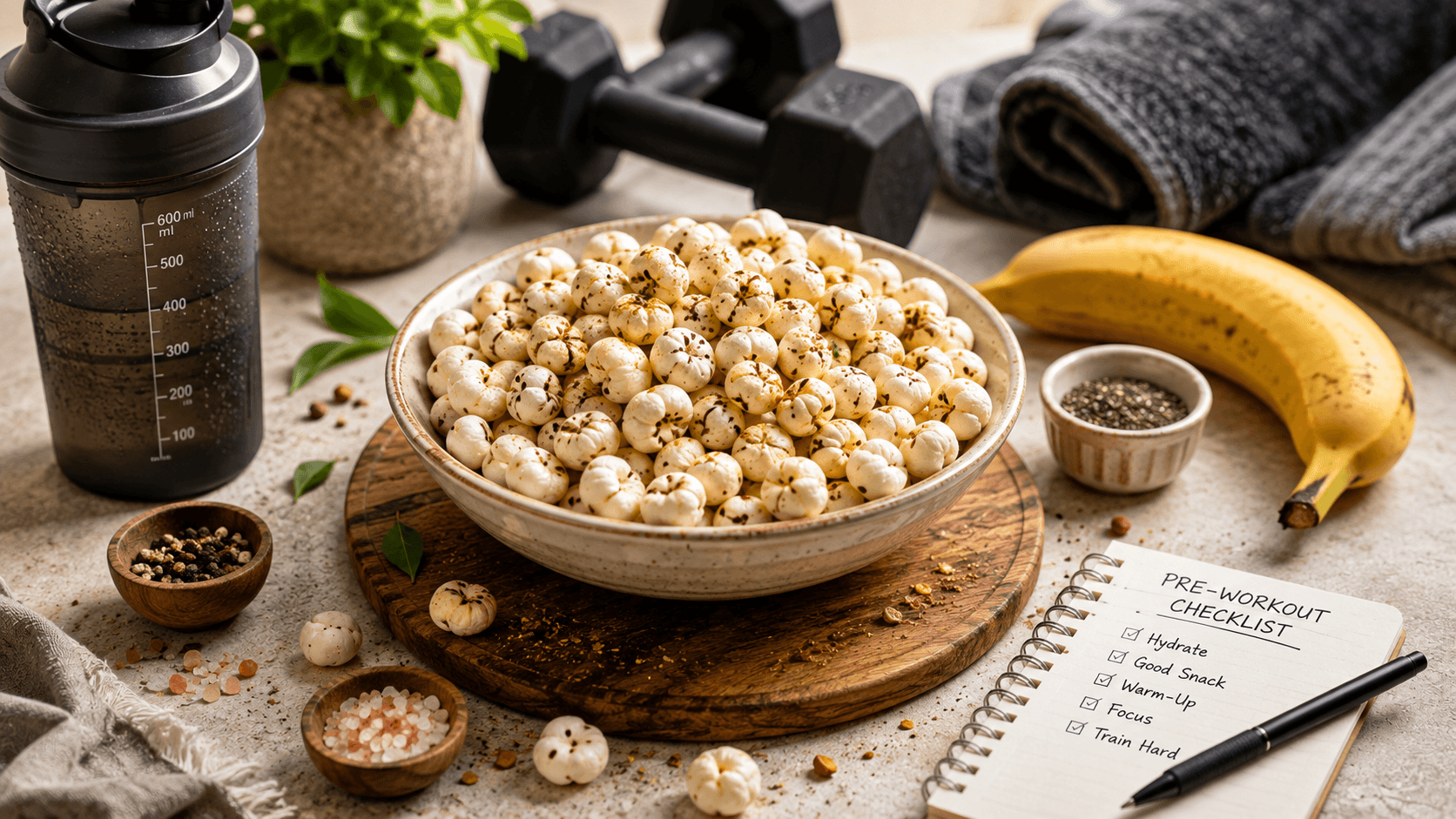
What you eat in the hour before training affects how you feel through the session — but not every pre-workout claim floating around fitness content is backed by evidence. Roasted makhana (fox nuts) has become a popular alternative to energy bars in India, and it does have a nutrition profile that fits reasonably well before a workout. This guide sticks to what its actual nutrient content supports, and where the marketing around it overreaches.
What's Actually in Makhana
Per 100 g, roasted makhana typically provides approximately:
- Calories: ~350 kcal
- Protein: ~9–10 g
- Carbohydrates: ~75–77 g
- Fibre: ~12–14 g
- Fat: under 1 g
- Potassium: ~500 mg
- Magnesium: roughly 60–70 mg (some sources report higher figures, but this range is the most consistently reported)
- Sodium: very low, unless salted or seasoned
A realistic snack-sized serving is 25–30 g, which scales these numbers down to roughly 90 kcal, 2.5–3 g protein, and 19–20 g carbohydrate.
Values are approximate and vary by product and preparation; always check the specific pack's nutrition label.
What This Nutrition Profile Actually Supports
- A light, carbohydrate-forward snack with low fat. Low fat and moderate fibre mean makhana digests without feeling heavy — a reasonable trait in a pre-workout snack, since high-fat or very high-fibre foods eaten too close to training can cause digestive discomfort for some people.
- Some potassium and magnesium contribution. Makhana does contain meaningful potassium and some magnesium, both electrolytes involved in muscle and nerve function. However, there is no strong evidence that eating makhana specifically prevents cramping during a workout — cramping has multiple causes, including hydration status, training load and individual factors, and a single snack is not a guaranteed fix.
- A useful carbohydrate top-up, not a "slow-burning 90-minute fuel source" in any precise, measurable sense. No source we found supports a specific 90-minute performance claim for makhana; treat that kind of figure with scepticism wherever you see it.
How Makhana Compares to Other Common Pre-Workout Options
| Option | Typical protein | Typical carbs | Best timing before training | Notes |
|---|---|---|---|---|
| Roasted makhana (30 g) | ~3 g | ~20 g | 30–45 min | Light, low-fat, easy to digest |
| Banana + peanut butter | ~4–5 g | ~30 g | 30–60 min | Fast carbs + a little protein and fat |
| Roasted chana (30 g) | ~7–8 g | ~15 g | 30–60 min | More protein per gram than makhana |
| Sattu drink | ~8–9 g | ~15 g | 30–45 min | Traditional, also hydrating |
| Protein/energy bar | 10–20 g | 15–30 g | 30–60 min | Convenient, but check the sugar content on the label — it varies a lot by brand, not universally high |
| Oats with milk | ~8–10 g | ~30 g | 60–90 min | Better suited to a longer lead time before training |
This is not a case of one option being universally superior. Energy bars are not automatically high-sugar — formulations vary widely, and several Indian brands specifically market low-sugar bars. The right choice depends on how much lead time you have, how intense the session is, and personal digestion.
Timing: Why It Matters More Than the Specific Snack
- 30–45 minutes before training: a lighter, mostly-carbohydrate snack works well — makhana, a banana, or a sattu drink all fit here.
- 60–90 minutes before training: you can tolerate a bit more food and some protein or fat, such as roasted chana, oats with milk, or a small bar.
- Hydration matters as much as food. Being under-hydrated is a common, evidence-backed cause of fatigue and cramping during exercise — arguably more relevant than any single snack choice.
A Reasonable Way to Use Makhana Before a Workout
A 25–30 g serving of roasted makhana, eaten plain or lightly salted, 30–45 minutes before training is a reasonable, easy-to-digest pre-workout snack for most people doing moderate-intensity training. If you're doing a longer or higher-intensity session, pairing it with a small additional protein source — like a few roasted peanuts or a small serving of curd — gives you a more balanced pre-workout snack.
There's no specific evidence to support pairing it with caffeine for muscle-cramp prevention; if you enjoy coffee before training for the alertness effect, that's a separate, reasonably well-supported benefit of caffeine itself, not something makhana adds to.
When an Energy Bar Might Still Be the Better Choice
- When you need a precise, labelled amount of protein or carbohydrate (useful for tracking).
- When you have very little time and need something fully self-contained with no prep.
- When you're training at high intensity for over an hour and want a more calorie-dense option.
Makhana and energy bars aren't strictly competing products — they suit different situations.
Frequently Asked Questions
Is makhana a good pre-workout snack?
Makhana is a reasonable pre-workout snack for light-to-moderate training: it's low in fat, easy to digest, and provides some carbohydrate, protein, potassium and magnesium. It is not a substitute for adequate hydration or a balanced diet, and claims of hours-long sustained energy from a single snack are not well supported.
Does makhana prevent muscle cramps?
Makhana contains potassium and magnesium, both involved in muscle function, but there is no strong evidence that eating makhana specifically prevents cramps during exercise. Cramping has multiple causes, including hydration and training load.
Is makhana better than an energy bar before a workout?
Neither is universally better. Makhana is lighter and easier to digest with less precise protein content; energy bars offer a labelled, more concentrated protein or carbohydrate amount. The better choice depends on training intensity, time before your workout, and personal digestion.
How much makhana should I eat before a workout?
A realistic serving is 25–30 g, roughly 30–45 minutes before training. Very large servings add more carbohydrate and calories than most short workouts require.
What should I eat 30 minutes before a workout in India?
Light, mostly-carbohydrate options like roasted makhana, a banana, or a small sattu drink are commonly recommended for a 30–45 minute pre-workout window, since they digest quickly without causing heaviness.
Final Takeaway
Roasted makhana is a legitimate, easy-to-digest pre-workout snack option with a reasonable nutrition profile — but it isn't a guaranteed fix for cramping or a 90-minute energy source, and it isn't automatically superior to every energy bar on the market. Choose based on your training window, intensity, and what sits well in your stomach, and treat hydration as at least as important as any single snack choice.
Born To Crave's roasted makhana is dry-roasted in small batches with real spices and no palm oil, making it a convenient option to keep in a gym bag. Explore the [roasted makhana collection], or read more in our guide to the [benefits of makhana].
This article is for general nutrition information only and is not a substitute for personalised medical, dietary or sports-nutrition advice.
Sources: Nutrition figures cross-checked against multiple published makhana nutrition profiles and USDA-referenced data; general pre- and post-workout nutrition timing principles are widely reported in sports nutrition guidance.
Dr. Anjali Menon, RD
BTC Editorial & Nutrition TeamThe Born To Crave Editorial and Food Science Team crafts deep-dive nutritional guides, culinary research, and healthy snacking breakdowns for wellness-focused consumers across India.
Continue Reading
More expert guides in Fitness

Never Miss a Healthy Snacking Breakthrough
Get scientifically backed nutritional breakdowns, healthy 5-minute recipes, and exclusive discount codes directly in your inbox.