
Ready-to-Eat Protein Snacks in India: The Real No-Prep List (2026)
A true ready-to-eat protein snack needs zero prep — no roasting, no chopping, no cooking. Here are the real no-prep, high-protein snacks available in India, with protein-per-serving, cost-per-gram, shelf life, and what to check on the label before buying.
Dr. Anjali Menon, RD
VerifiedBTC Nutrition & Culinary Team
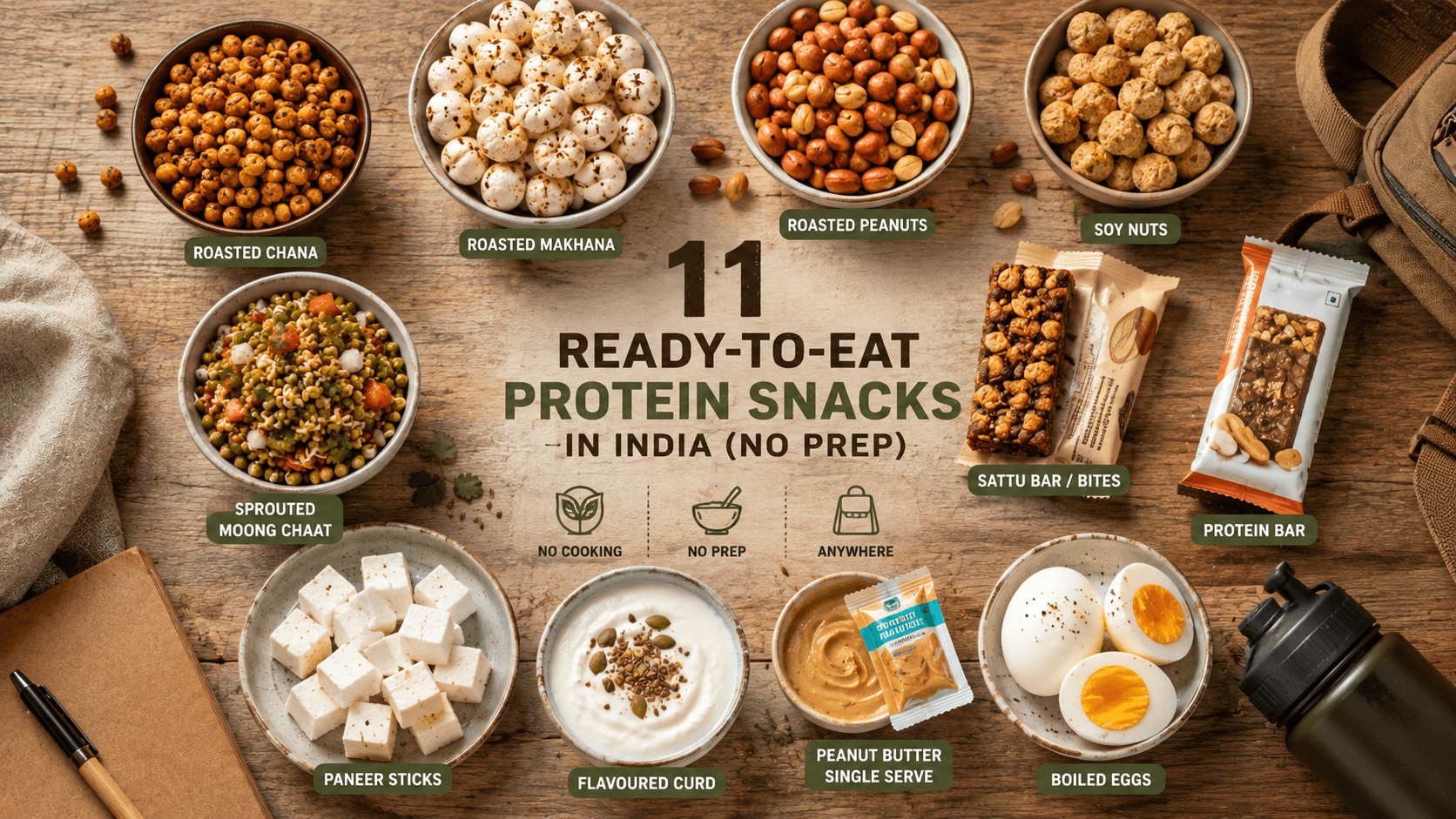
# Ready-to-Eat Protein Snacks in India: The Real No-Prep List
Most "ready-to-eat protein snack" lists in India are not actually ready to eat. Roasted chana needs roasting. Sprout chaat needs chopping and mixing. Grilled paneer needs a pan. These are quick snacks, not zero-prep snacks — and if you're stocking a desk drawer, gym bag or travel pouch, that distinction matters.
This guide only includes snacks you can eat straight from the pack, jar or fridge, with no cooking, chopping or seasoning step required. It also covers protein per serving, approximate cost per gram of protein, shelf life, and how to read a label so a "high-protein" claim on a pack actually holds up.
What Actually Counts as "Ready to Eat"?
For this guide, a snack qualifies as ready-to-eat only if it meets all three conditions:
- 1No cooking or heating required — not even a quick pan-fry or microwave step.
- 2No chopping, mixing or seasoning needed at the point of eating.
- 3Stable enough to carry — either shelf-stable at room temperature, or safely refrigerator-stable and pre-portioned.
By this definition, roasted chana counts (once it's already roasted and packed), but a chana chaat you assemble yourself does not. A protein bar counts. A DIY moong salad does not, however healthy it is.
True Ready-to-Eat Protein Snacks in India
Quick comparison
| Snack | Type | Typical serving | Approx. protein* | Approx. cost per 10 g protein | Shelf life (unopened) |
|---|---|---|---|---|---|
| Roasted chana (packaged) | Traditional | 40 g | ~10–11 g | ₹3–5 | 3–6 months |
| Roasted makhana (packaged) | Traditional | 30 g | ~4–5 g | ₹15–20 | 4–6 months |
| Roasted peanuts (packaged) | Traditional | 30 g | ~7–8 g | ₹3–5 | 3–6 months |
| Soy nuts / soya chips | Traditional-modern | 30 g | ~9–11 g | ₹4–7 | 4–6 months |
| Sattu premix bar/bites | Traditional-modern | 30 g | ~9–10 g | ₹5–8 | 3–6 months |
| Protein bar (whey/plant) | Packaged | 1 bar (30–50 g) | ~10–20 g | ₹12–22 | 6–9 months |
| Protein chips/puffs | Packaged | 25–30 g | ~7–10 g | ₹15–25 | 4–6 months |
| Boiled eggs (pre-boiled, refrigerated) | Fresh, no-cook | 2 eggs | ~12–13 g | ₹4–6 | 3–5 days refrigerated |
| Paneer/cheese sticks (pre-packaged) | Fresh, no-cook | 1 pack (~30–40 g) | ~7–9 g | ₹10–16 | 5–10 days refrigerated |
| Flavoured curd/yogurt cup | Fresh, no-cook | 100–150 g | ~5–7 g | ₹10–15 | 5–10 days refrigerated |
| Peanut butter single-serve sachet | Packaged | 30 g | ~7–8 g | ₹6–10 | 6–12 months |
*Protein values are approximate, based on commonly reported figures from the Indian Food Composition Tables (IFCT 2017, ICMR-National Institute of Nutrition) and typical packaged-product labels. Always confirm with the specific product's nutrition panel.
Cost estimates are approximate 2026 Indian retail prices and vary by brand, city and pack size.
1. Packaged Roasted Chana
Once roasted and sealed, roasted chana is one of the most cost-efficient true RTE snacks available — no prep, long shelf life, and it travels well in a bag or drawer without refrigeration.
Best for: desk drawer, travel, daily budget snacking.
2. Packaged Roasted Makhana
Makhana is lighter on protein per serving than most items on this list, but it is genuinely zero-prep, low in oil compared to fried namkeen, and satisfies a crunch craving without needing any assembly.
Best for: evening snacking, a lighter crunchy option, pairing with a higher-protein item.
3. Packaged Roasted Peanuts
Plain or lightly salted roasted peanuts need no prep and are one of the cheapest protein sources per gram in this entire list.
Best for: budget snacking, travel, bulk-buying for the pantry.
4. Soy Nuts and Soya Chips
Roasted soy nuts and baked soya chips are an underused RTE option — soy is a complete protein, and packaged versions need no cooking at all.
Best for: vegetarians and vegans looking for a complete plant protein with no prep.
5. Sattu Premix Bars or Bites
While a sattu drink requires mixing with water, several Indian brands now sell pre-formed sattu bars or bites that are genuinely ready to eat straight from the wrapper.
Best for: a traditional-ingredient snack in a modern, zero-prep format.
6. Protein Bars
Protein bars are the most heavily marketed RTE category in India, ranging from 10 g to 30 g of protein per bar. They are the most expensive option per gram of protein on this list, so check the label carefully (see below) before assuming a bar is automatically the best choice.
Best for: post-workout, travel days, and anyone who wants a precise, labelled protein amount.
7. Protein Chips and Puffs
Baked lentil- or pea-based protein chips are a genuinely no-prep alternative to regular potato chips, usually delivering meaningfully more protein per pack.
Best for: replacing regular fried namkeen or chips without giving up the crunch.
8. Pre-Boiled, Refrigerated Eggs
Eggs are not shelf-stable at room temperature once boiled, but pre-boiled and refrigerated eggs are genuinely zero-prep at the point of eating — peel and go.
Best for: home or office fridge storage, not for all-day carrying without a cooler bag.
9. Paneer or Cheese Sticks (Pre-Packaged)
Several Indian dairy brands now sell individually wrapped paneer or cheese sticks that need no cooking or seasoning.
Best for: refrigerated office snacking, kids' tiffins, and quick protein between meals.
10. Flavoured Curd or Yogurt Cups
Single-serve curd or yogurt cups are true RTE — no mixing, no prep — though protein per serving is lower than most other items here, and added sugar varies significantly between brands.
Best for: breakfast or mid-morning, when paired with a higher-protein item for a fuller snack.
11. Peanut Butter Single-Serve Sachets
Single-serve peanut butter sachets are genuinely zero-prep — no spreading required if eaten directly, though many people pair them with fruit or bread (which would then no longer be zero-prep).
Best for: travel, gym bags, and portion control.
How to Read the Label on a Packaged RTE Protein Snack
A "high protein" claim on the front of an Indian snack pack does not always mean the product is nutritionally sound. Before buying, check:
- Protein per serving, not per pack. Some packs contain more than one serving; the front-of-pack number may not reflect what you'll actually eat in one sitting.
- Added sugar. Aim for single digits (under ~8–10 g) per serving where possible, especially in bars and flavoured yogurt cups.
- Protein source. Whole-food protein (soy, dairy, legumes, eggs) and isolated protein (whey isolate, pea isolate) are both legitimate, but a product relying heavily on isolates while still being high in refined carbs and oil is not automatically "clean."
- FSSAI license number. Genuine packaged food products sold in India must carry an FSSAI license number on the label — a quick way to sanity-check a product before buying, especially from smaller or newer brands.
- Ingredient list length. A shorter, recognisable ingredient list is generally a better sign than a long list of stabilisers, gums and artificial flavours.
Where to Keep Each Type of RTE Snack
| Location | Best-fit RTE snacks |
|---|---|
| Desk drawer (no fridge) | Roasted chana, roasted peanuts, soy nuts, protein bars, peanut butter sachets |
| Gym bag | Protein bars, roasted chana, peanut butter sachets |
| Travel bag | Roasted chana, roasted peanuts, protein bars, protein chips |
| Office/home fridge | Pre-boiled eggs, paneer or cheese sticks, curd cups |
| Pantry (bulk stock) | Roasted chana, roasted peanuts, roasted makhana, soy nuts |
Which RTE Snack Gives the Most Protein for the Money?
Based on typical 2026 Indian retail prices, packaged roasted chana, roasted peanuts and soy nuts tend to offer the lowest cost per gram of protein among true RTE options. Protein bars and protein chips sit at the more expensive end, since you're also paying for packaging, shelf stability and convenience formatting.
Are Homemade Prep-Ahead Snacks Still Worth It?
Yes — snacks like sprout chaat, boiled chana salad or grilled paneer are often more cost-efficient and less processed than packaged options. They simply don't qualify as "ready to eat" under the zero-prep definition used in this guide. If a few minutes of prep the night before works for your routine, they remain excellent additions alongside the true RTE options above. For a broader list including these, see our [high-protein clean snacks India guide].
Frequently Asked Questions
What is a truly ready-to-eat high-protein snack?
A truly ready-to-eat snack needs no cooking, chopping or seasoning at the point of eating, and is either shelf-stable or safely refrigerator-stable in a pre-portioned form. Packaged roasted chana, protein bars and pre-boiled refrigerated eggs are examples.
Is roasted chana really ready to eat?
Packaged, pre-roasted chana is ready to eat straight from the pack. Chana that you roast yourself at home is a quick snack, but not ready to eat in the zero-prep sense.
Which ready-to-eat snack has the best protein for the price in India?
Based on typical 2026 retail prices, packaged roasted chana, roasted peanuts and soy nuts tend to offer the lowest cost per gram of protein among true ready-to-eat options in India.
Are protein bars a good ready-to-eat option in India?
Protein bars are genuinely zero-prep and offer a labelled, precise protein amount, but they are typically the most expensive option per gram of protein on this list. Check added sugar and protein source on the label before choosing one.
How long do ready-to-eat protein snacks last?
Shelf-stable packaged snacks like roasted chana, peanuts, makhana and protein bars typically last 3–9 months unopened. Refrigerated options like pre-boiled eggs, paneer sticks and curd cups last only a few days and must be kept cold.
How do I know if a packaged protein snack sold in India is genuine?
Check for an FSSAI license number on the label, a full ingredient list, and protein-per-serving information rather than relying on front-of-pack claims alone.
Final Takeaway
Most "ready-to-eat" snack lists blur the line between zero-prep and quick-prep. If you genuinely need something you can eat straight from the pack — for a desk drawer, a gym bag, or a long travel day — packaged roasted chana, peanuts, soy nuts, protein bars and refrigerated options like pre-boiled eggs or paneer sticks are your real choices. Compare protein per serving and cost per gram of protein rather than trusting a front-of-pack claim, and check the label for added sugar and an FSSAI license number before buying.
Born To Crave focuses on modern Indian snacking, including roasted makhana and other genuinely ready-to-eat, crunchy snack options designed for convenient everyday eating.
This article is for general nutrition information only and is not a substitute for personalised medical or dietary advice. Protein and cost figures are approximate; always refer to product labels for exact values.
Sources: Indian Food Composition Tables (IFCT 2017), ICMR-National Institute of Nutrition; FSSAI packaged food labelling requirements.
Dr. Anjali Menon, RD
BTC Editorial & Nutrition TeamThe Born To Crave Editorial and Food Science Team crafts deep-dive nutritional guides, culinary research, and healthy snacking breakdowns for wellness-focused consumers across India.
Continue Reading
More expert guides in Nutrition
Never Miss a Healthy Snacking Breakthrough
Get scientifically backed nutritional breakdowns, healthy 5-minute recipes, and exclusive discount codes directly in your inbox.