
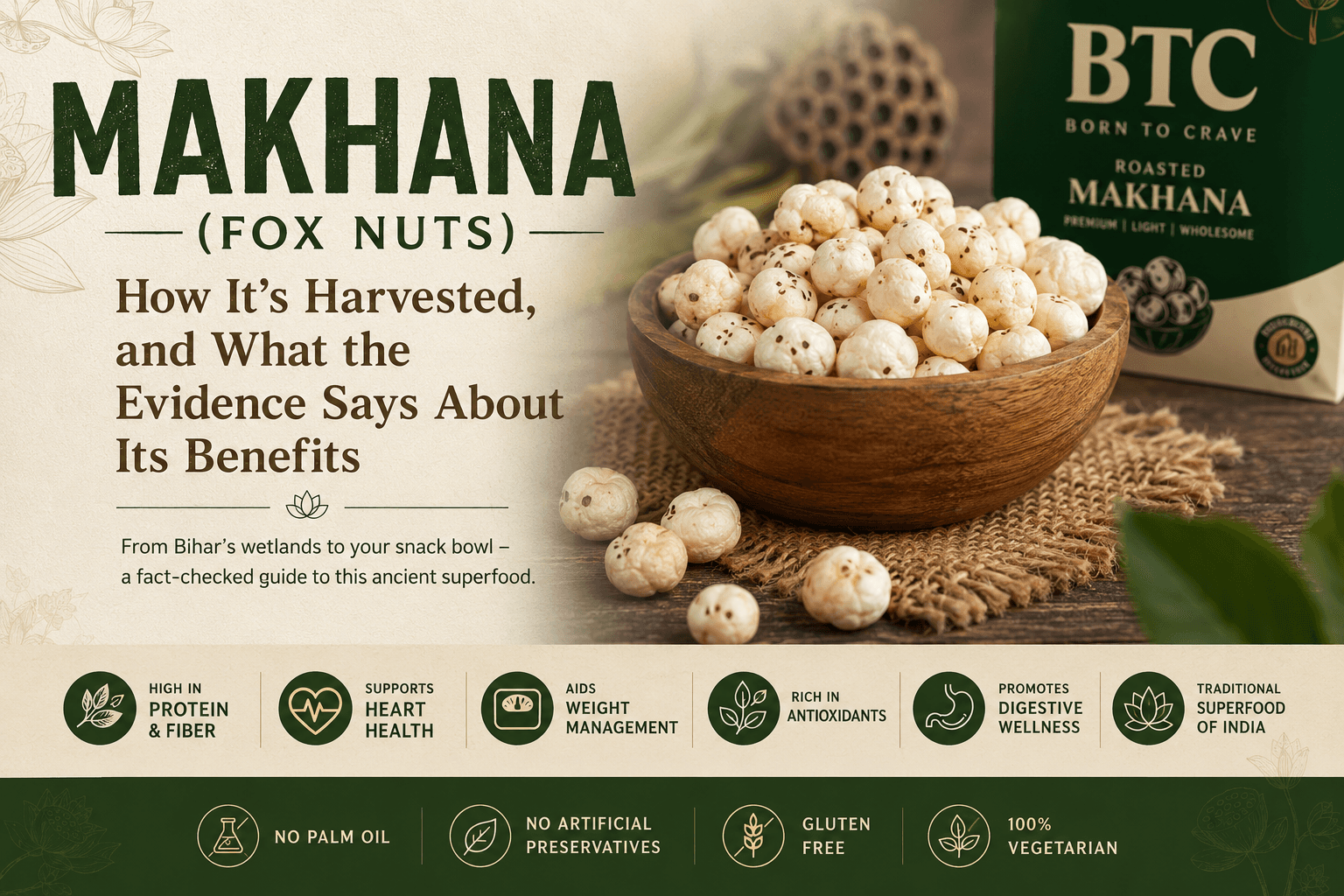
Makhana (Fox Nuts): How It's Harvested, and What the Evidence Says About Its Benefits
From Bihar's wetlands to your snack bowl: how makhana is harvested and processed, and a fact-checked look at what the research actually supports about its health benefits — including where the evidence is still limited.
BTC | Team
VerifiedBTC Nutrition & Culinary Team
# Makhana (Fox Nuts): How It's Harvested, and What the Evidence Says About Its Benefits
Makhana, known botanically as Euryale ferox and commonly called fox nuts or popped lotus seeds, has a long history in Indian diets and a growing reputation internationally as a wholesome snack. Much of that reputation is well earned — but some claims made about it online go further than the current evidence supports. This guide covers how makhana is actually harvested and processed, then separates what's well established from what's still preliminary.
Where Makhana Comes From
India is the world's largest producer of makhana, and Bihar alone accounts for roughly 80–85% of global supply, according to government data shared in the Rajya Sabha in December 2025. Darbhanga district in Bihar is one of the key hubs for cultivation and processing, and hosts the ICAR-National Research Centre on Makhana.
How Makhana Is Harvested and Processed
Harvesting makhana is a labour-intensive, traditional process:
- 1Underwater retrieval. Farmers gather the seeds of the prickly water lily plant from shallow pond beds, often by hand.
- 2Sun drying and grading. The raw seeds are sun-dried and graded by size.
- 3Roasting and popping. The seeds are roasted in heated pans, then struck to crack open the hard outer shell and release the popped white seed inside.
The overall process is genuinely more manual and traditional than most modern packaged snacks, which is part of why makhana pricing reflects labour-intensive sourcing rather than industrial-scale automation.
What the Evidence Actually Supports
Nutrition profile
Per 100 g, roasted makhana typically provides approximately 340–350 kcal, 9–10 g protein, 75–77 g carbohydrate, 12–14 g fibre, under 1 g fat, and is naturally low in sodium (commonly reported in the low single digits to under 10 mg per 100 g) while providing meaningful potassium (around 500 mg per 100 g). This gives it a favourable potassium-to-sodium ratio, though exact figures vary by source and preparation — if you're managing blood pressure, look at the label on your specific product rather than relying on a fixed ratio.
Antioxidant content — real, but mostly early-stage research
Makhana contains flavonoids including kaempferol, along with other antioxidant compounds. Laboratory and animal studies link kaempferol to anti-inflammatory and antioxidant effects, and some early research has explored potential skin-health benefits through amino acids involved in collagen production. However, human clinical research specifically on makhana's effects on skin or aging is limited, and claims like "maintains skin elasticity" are not yet established in human studies — they're a reasonable hypothesis based on the compounds present, not a proven outcome.
Heart health — plausible, still evolving
The low sodium, low fat and favourable potassium content are broadly consistent with heart-healthy eating patterns, and some animal studies have shown makhana extract reducing triglyceride and cholesterol markers. Human clinical trials specifically on makhana and cardiovascular outcomes are still limited, so it's reasonable to treat it as a heart-friendly snack choice within a balanced diet, not a treatment.
Kidney health — a claim that needs correcting, not confirming
Some traditional and folk sources describe makhana as supportive of kidney health, partly due to its mild diuretic reputation. However, makhana is also relatively high in potassium and phosphorus compared to many snacks. People managing kidney disease are commonly advised to watch their potassium and phosphorus intake, so rather than assuming makhana is automatically kidney-friendly, anyone with kidney disease should check with their doctor or a renal dietitian before making it a regular snack.
Satiety and weight management
Makhana's combination of protein and fibre is genuinely useful for feeling full, which is a well-established general principle of nutrition — higher protein and fibre intake is linked to better appetite regulation and satiety. Attributing this to a specific hormonal mechanism (such as suppressing a named hunger hormone) isn't something the current evidence on makhana specifically supports; the simpler, well-supported explanation is that protein and fibre slow digestion and promote fullness.
Pregnancy nutrition
Makhana does contain folate, iron and calcium, nutrients that matter during pregnancy. That said, individual nutritional needs during pregnancy vary and are best guided by an obstetrician or dietitian rather than a general food recommendation — treat this as a reasonably nutritious snack option to discuss with your doctor as part of an overall diet, not a targeted prenatal supplement.
Traditional use in Asian medicine
Makhana has a long history of use in traditional Chinese and Ayurvedic medicine, including for digestive and "tonic" purposes. This is a genuine part of its cultural history, but traditional use is a different category of evidence from clinical research, and readers should treat historical use as context rather than a health claim in itself.
Choosing Good-Quality Makhana
When buying packaged makhana, look for:
- Grade and size consistency — larger, evenly sized, unbroken puffs (sometimes labelled by grade or size count) generally indicate better quality and less bitterness from unpopped kernels.
- Minimal oil in roasted varieties — some brands deep-fry rather than dry-roast, which changes the fat content significantly.
- An FSSAI license number and a clear ingredient list, especially for flavoured varieties.
Frequently Asked Questions
Where does most of the world's makhana come from?
India produces the large majority of the world's makhana, and Bihar alone contributes an estimated 80–85% of global supply, according to Indian government data presented in Parliament in December 2025.
Does makhana really help with anti-aging or skin health?
Makhana contains antioxidant compounds like kaempferol that are plausible candidates for skin benefits based on laboratory research, but human clinical studies specifically confirming skin or anti-aging benefits from eating makhana are limited. Treat this as an emerging area of research rather than an established benefit.
Is makhana good for kidney health?
This isn't clear-cut. Makhana has a traditional reputation for being kidney-friendly, but it's also relatively high in potassium and phosphorus. People with kidney disease should check with their doctor or a renal dietitian before making it a regular snack.
Can pregnant women eat makhana?
Makhana contains folate, iron and calcium, which are relevant nutrients during pregnancy, but individual needs vary. It's best discussed with your obstetrician or dietitian as part of your overall diet rather than treated as a specific prenatal recommendation.
Is makhana genuinely a traditional, handmade product?
Yes — makhana harvesting and processing in Bihar still relies heavily on manual retrieval, sun-drying, and hand-roasting and popping, which is part of why sourcing and pricing reflect labour-intensive production rather than industrial automation.
Final Takeaway
Makhana's core nutrition profile — low fat, meaningful protein and fibre, low sodium, and a traditional, still largely manual production process centred in Bihar — is genuinely well supported. Some of the more specific health claims circulating about it, particularly around skin anti-aging, kidney health, and hormone-level effects, are either early-stage research or need important caveats. Enjoy it as a wholesome, versatile snack, and treat the more specific medical claims with the same scepticism you'd apply to any single food being called a cure-all.
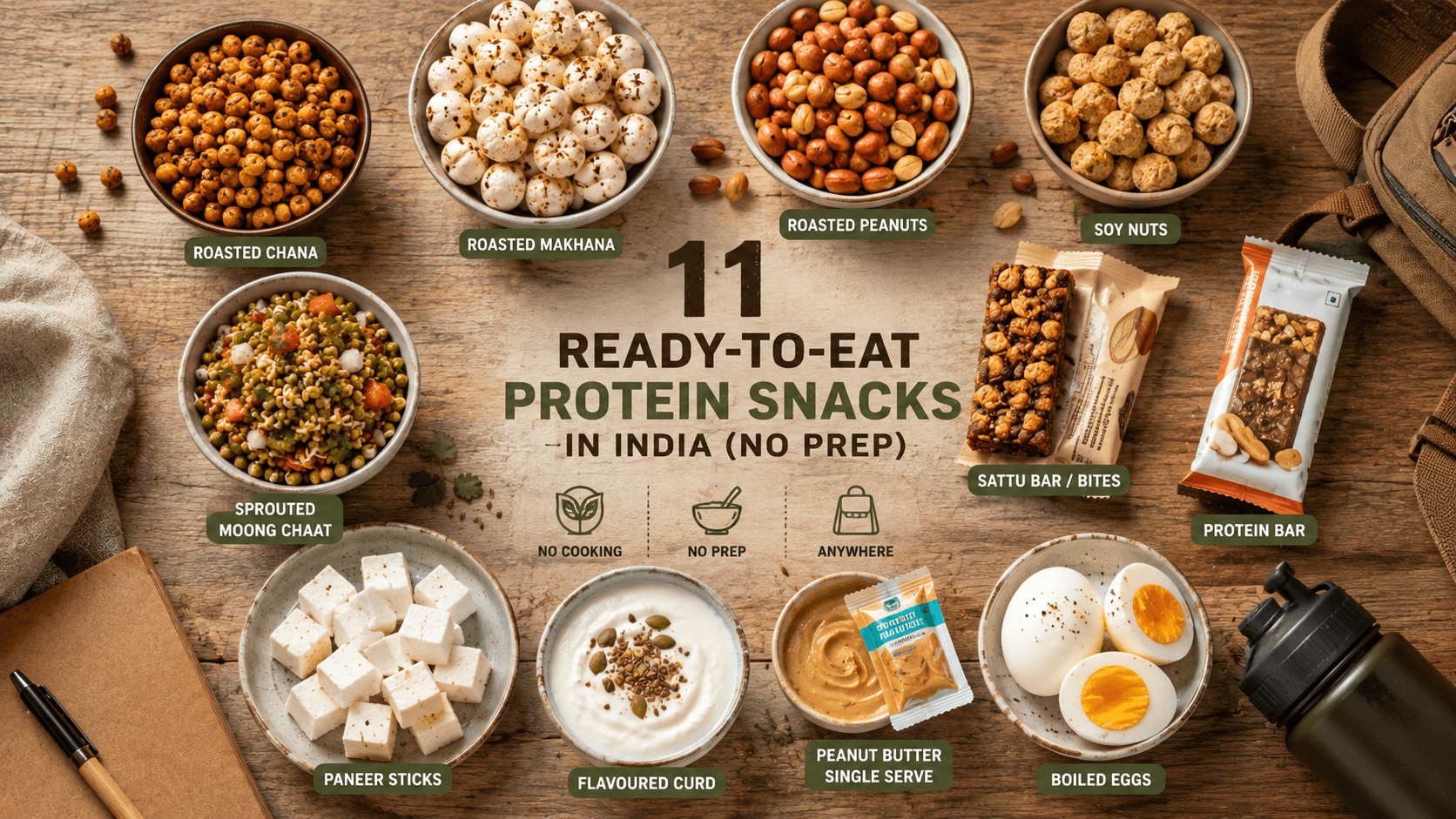
Born To Crave sources Grade-A makhana and dry-roasts it in small batches with real spices and no palm oil. Explore the [roasted makhana collection], or see our practical guide to [ready-to-eat protein snacks in India].
This article is for general nutrition information only and is not a substitute for personalised medical or dietary advice — particularly for pregnancy or kidney-related conditions, where you should consult a qualified healthcare professional.
Sources: Government of India, Rajya Sabha reply on makhana production (December 2025); nutrition figures cross-checked against multiple published makhana nutrition profiles; general findings on kaempferol and related compounds are drawn from laboratory and animal studies, with human research on makhana specifically noted as limited where relevant.
BTC | Team
BTC Editorial & Nutrition TeamThe Born To Crave Editorial and Food Science Team crafts deep-dive nutritional guides, culinary research, and healthy snacking breakdowns for wellness-focused consumers across India.
Continue Reading
More expert guides in Makhana Guides

Never Miss a Healthy Snacking Breakthrough
Get scientifically backed nutritional breakdowns, healthy 5-minute recipes, and exclusive discount codes directly in your inbox.